
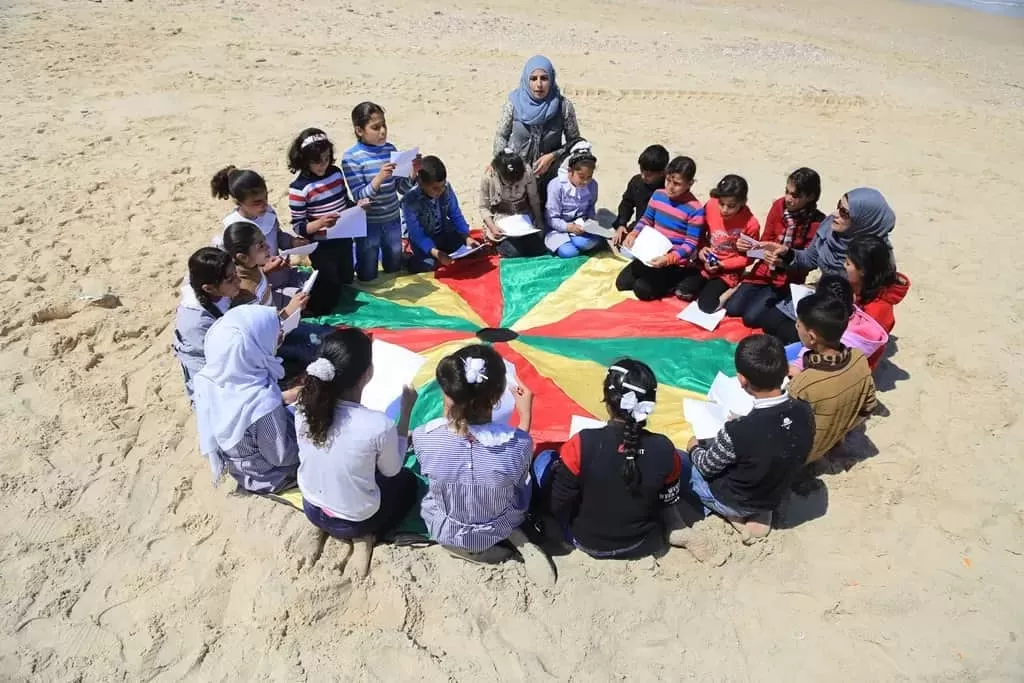
The Community Education Program at Tamer Institute is dedicated to promote the notion of learning as a dynamic, collective practice springing from the community and flowing back into it, thriving in the embrace of safe and open spaces for learning and dialogue that bring together children and youth, and strengthen the role of those who accompany them daily, while anchoring knowledge in daily reality and life experiences. The program focuses on supporting participatory educational initiatives and promoting reading, critical thinking, and free expression through carrying out diverse activities, workshops, and programs in partnership with cultural actors, institutions, and local groups, for the purpose of empowering communities to play an active role in designing and implementing the educational process, while also advocating for educational justice and upholding the notion of culture as a fundamental right for all.
Within this framework, the Community Education Program operates through a group of integrated spaces and programs to achieve its goals, most notably the National Reading Campaign in Palestinian Society. Launched in 1992, this campaign is held in collaboration with an extensive network of local and international institutions and embodied in the following events: "“National Reading Week”", "Read to Me, Baba" campaign, "I Donated a Book" campaign, "Home to Home" campaign, and the "Nawwar Nisan" Festival.
The program also includes the Children Literature Library Networks space, with its two main components: the Community Library Network and the School Library Network, serving as sustainable platforms for learning and participation. Alongside this, it provides a space for youth composed of five teams focused on various expressive arts: Yara’at, Voices from Palestine, Banafsaj, Sarb, and Nakheel, paving the way for them for creative expression and active cultural participation.
This program also encompasses the Protection Program, aligning specialized intervention with community outreach, deriving its work from the concept of community education. The involvement of children and their participation in cultural and social activities contributes to their self-discovery and learning about the world around them, allowing them to grow and express themselves in an environment of freedom and dignity, develop their ability to communicate, and build self-confidence and a sense of community belonging within a safe and supportive sphere that represents a fundamental pillar for their psychological and social protection.